 ISITMAX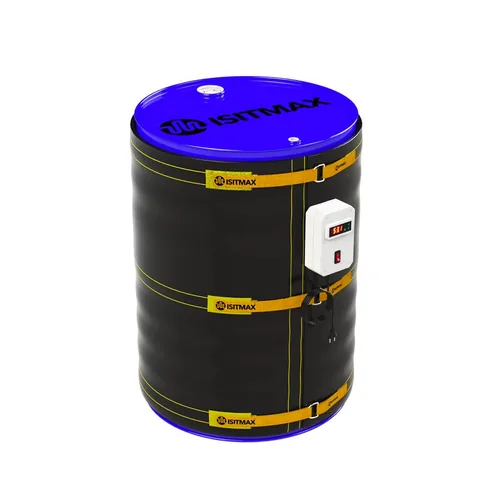
Flexible Heaters & Jackets
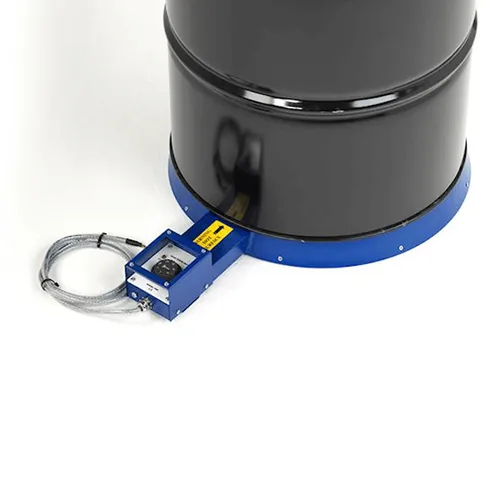
Industrial Electric Drum Heating Jacket 200 L / 215 L
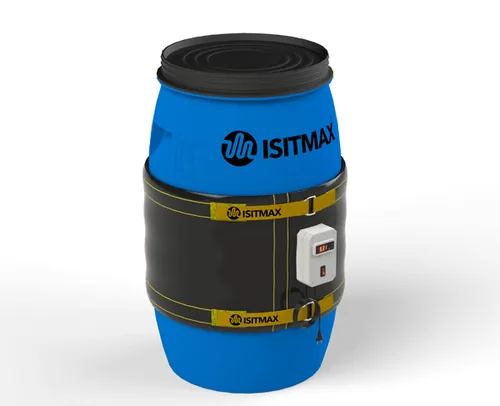
The drum heating jacket is a flexible electric heater that wraps the full body of 200, 215 and 220 litre drums.
from €480 $555View product →
Bitumen, paint, glucose, resin, heavy oils and gelatine must reach a workable viscosity before they can be processed or pumped. There are four ways to get there — and the right one depends less on the material than on whether the container moves and whether you need to heat up once or hold temperature all day.
The drum heating jacket is a flexible electric heater that wraps the full body of 200, 215 and 220 litre drums.
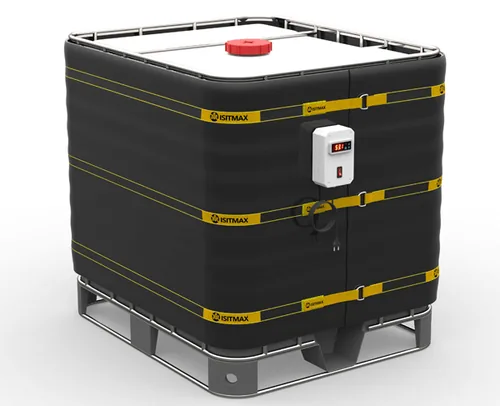
The IBC tank heating jacket is an industrial heating jacket that wraps a 1,000 litre caged IBC tank on all four sides.
The canister heating jacket is a flexible electric heating wrap that encloses a 120 litre canister from the outside, rated at 800
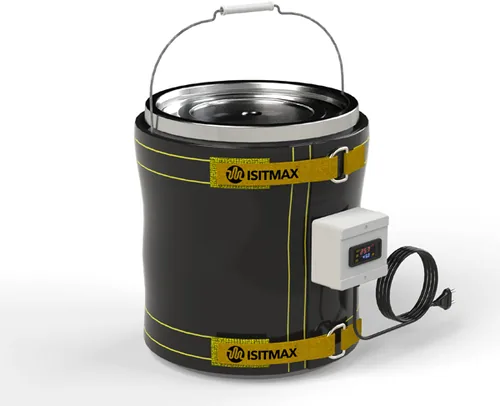
The bucket heating jacket is a flexible electric heating wrap that encloses a standard 19-litre bucket from the outside.
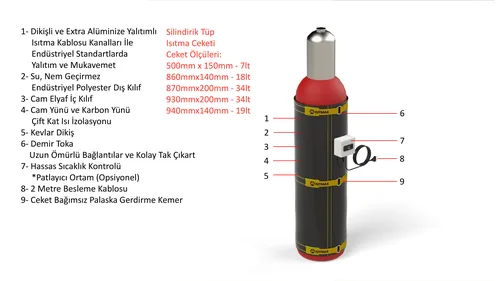
The gas cylinder heating jacket is a flexible heater that wraps the body of upright cylindrical vessels such as gas cylinders and
The drum heating unit is a plate-type drum heating device that heats 200 litre steel drums from the base only.
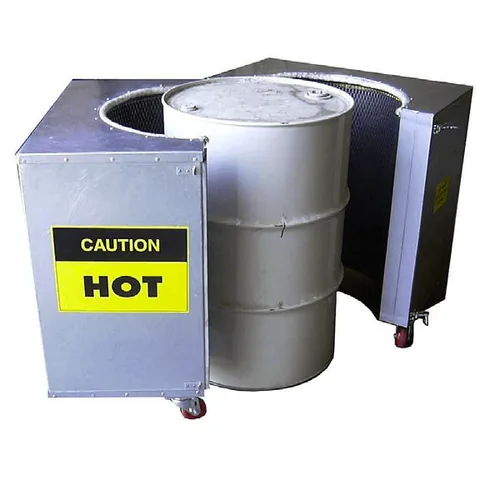
The industrial drum heating cabinet is a wheeled drum heating unit that encloses a single 200–220 litre drum in an insulated.
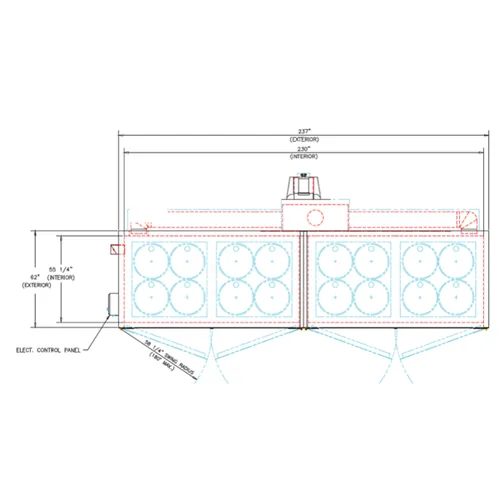
The drum heating oven brings the raw material in drums and IBC tanks to the right viscosity before manufacture by heating it at a
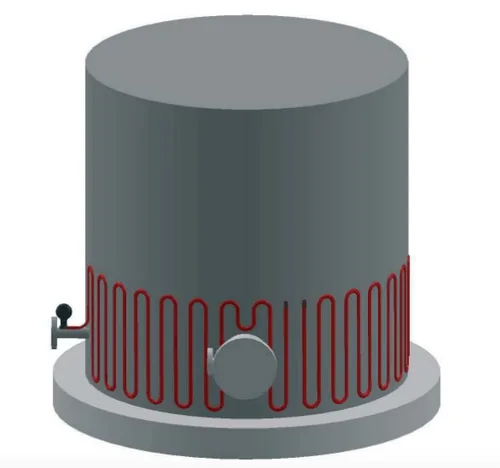
Industrial tank heat tracing is a heating cable system wrapped around the body of storage and process tanks: it prevents the liqui
The two jobs look alike but need different systems. Heating up brings a cold or solid material to process temperature — a time-limited job whose energy depends on mass, specific heat and temperature rise. Keeping warm stops a material that is already at temperature from cooling — a continuous job whose power depends on heat loss through the surface, so insulation decides the result.
In practice: to heat up, power matters and a jacket or oven is the right tool. To keep warm, insulation matters — an uninsulated tank loses the energy no matter how much power you install. Most plants need both: bring the material to temperature in the morning and hold it there all day. Size the power for heating up, and the insulation for holding.
Wrapped around the container, fastened with straps and taken off when the job is done. It works where the container stands, takes no floor space and one jacket can serve several drums in turn — the right choice for containers that move, rotate or change often. FlexMax jackets are made for 19 L buckets, 120 L canisters, 200–220 L drums, 1,000 L IBC totes and gas cylinders; pipe and valve jackets belong to the same family.
Heating cable is laid on the tank wall or along the pipeline, covered with insulation and stays there. It is the method for fixed storage tanks, silos and process lines: it follows any geometry, covers the whole line and suits continuous operation. See tank heat tracing and our heat tracing guide.
Containers go inside; fan-driven air heats them all evenly. Choose this when several drums or IBC totes must be heated at once, when the target is above what a jacket can reach, or when there is a continuous flow. Electric models reach 150 °C, steam and thermal-oil models 120 °C. Standard drum ovens hold 1–24 drums (electric E series, steam S series); the drum heating cabinet takes a single 200–220 L drum up to 120 °C. Larger capacities are built as project-based warming rooms.
Heats one zone, not the whole container. The base heater sits under a 200 L steel drum and heats from the bottom; a band heater heats a strip of the drum wall at high power. When the goal is flow at the outlet rather than heating the whole content, this is the most economical method. Band heaters work from 20 to 150 °C and up to three can be combined.
| Feature | Jacket | Heat tracing | Oven / cabinet | Base / band |
|---|---|---|---|---|
| Container | Portable | Fixed | Portable | Portable |
| Removable | Yes | No | — | Yes |
| Insulation | Built in | Installed separately, required | Built in | None |
| Containers at once | 1 | Along the line | 1–24 | 1 |
| Heated zone | Whole body | Where laid | Whole container | Base or strip |
| Continuous duty | Medium | High | High | Medium |
| Floor space | None | None | Yes | Little |
| Warranty | 2 years | 2 years | 2 years | 2 years |
A plant usually uses more than one: heat tracing on fixed storage tanks, jackets on drums going into production, an oven for seasonal batch work. They are not alternatives but answers to different tasks.
| Material | Typical temperature | Sector |
|---|---|---|
| Olive oil | 30–40 °C | Food |
| Syrup, molasses | 35–45 °C | Food |
| Honey | 40–45 °C | Food |
| Chocolate | 45–50 °C | Food |
| Engine oil | 40–50 °C | Automotive |
| Epoxy | 40–50 °C | Chemicals |
| Resin | 50–60 °C | Chemicals, paint |
| Glue | 55–65 °C | Adhesives |
| Beeswax, paraffin | 60–70 °C | Cosmetics, candles |
Values are typical working temperatures; your recipe may differ. Tell us your target and we size the power with you.
| Container | Method | Heat-up (h) | Energy (kWh) |
|---|---|---|---|
| Bucket | Jacket | 1 | 1.2 |
| Bucket | Base plate | 0.5 | 0.8 |
| Canister 60 L | Jacket | 2 | 2.8 |
| Canister 120 L | Jacket | 3 | 4.5 |
| Drum 200 L | Jacket | 4 | 6.5 |
| Drum 200 L | Heating cable | 5 | 7.2 |
| Drum 200 L | Base plate | 3 | 5.5 |
| IBC 1,000 L | Jacket | 8 | 12.5 |
| IBC 1,000 L | Heating cable | 9 | 14.2 |
| IBC 1,000 L | Oven | 5 | 9.5 |
Times are for a full container at 20 °C ambient without extra insulation. With insulation, both time and consumption drop noticeably.
Plastic containers: 60 °C ceiling. For HDPE drums and IBC totes the manufacturer limit is 60 °C maximum filling temperature and 49 °C continuous. Above that the container softens. If you need more, transfer the material to a steel container or use an oven — more jacket power is not the answer.
Closed containers build pressure. Warming contents expand; vent the container while heating. Heating a tightly closed drum is not safe.
Residual current protection is mandatory. Heating jackets are double insulated, but every installation must be fed through a residual current device (RCD). In hazardous (Ex) areas, antistatic and ATEX-rated products are required — a standard jacket is not suitable there.
Fixed or portable, volume, material and target temperature — with these four we recommend the method, power and price the same day.