 ISITMAX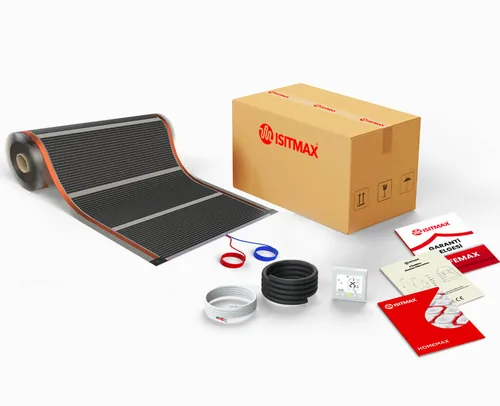
Floor Heating
Under-Parquet Floor Heating Carbon Heating Film
Under-parquet floor heating carbon heating film is an electric heating element with a power density of 200 W/m² and a thickness of
from €200 $230View product →
Electric underfloor heating turns electricity directly into heat in the floor itself — no boiler, no manifold, no pipework. That is why it is the usual choice for renovations, bathrooms and kitchens, and for heating one room at a time. The real decisions are three: which heater suits the floor covering, which power step suits the room, and how the thermostat splits the house into zones.
Under-parquet floor heating carbon heating film is an electric heating element with a power density of 200 W/m² and a thickness of
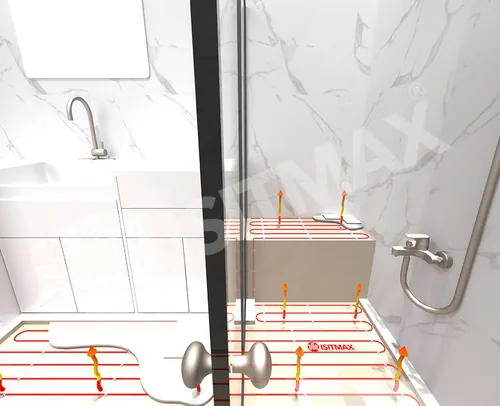
Bathroom floor heating warms a ceramic or tiled bathroom floor with a 180 W/m² electric heater embedded in the screed.
Kitchen floor heating works with a 150 W/m² electric heater buried beneath the ceramic covering of the kitchen floor.
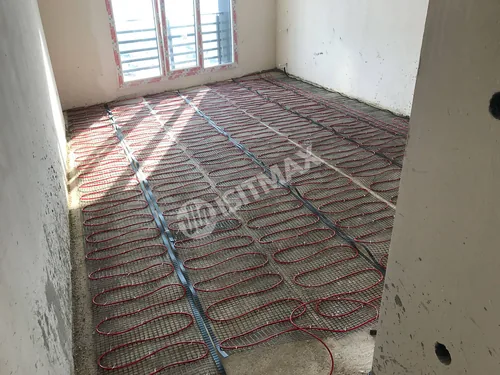
Room and Living Room Floor Heating is a system that heats the floor of a living room, bedroom, study or hallway with a 150 W/m² el
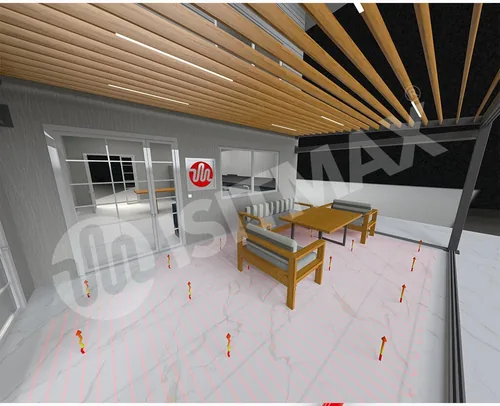
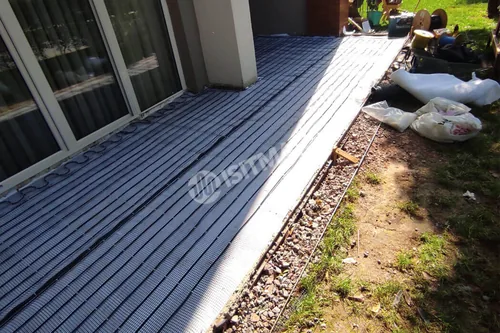
Balcony, terrace and conservatory floor heating is a floor heating system that warms open or glazed floors with a 200 W/m² electri
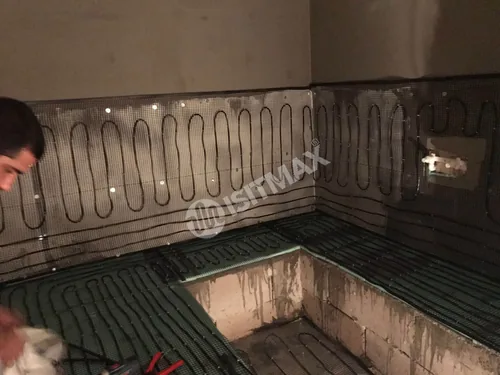
Hammam floor heating warms the walking area, seating area, backrest area and navel stone of a hammam with a 240 W/m² electric heat
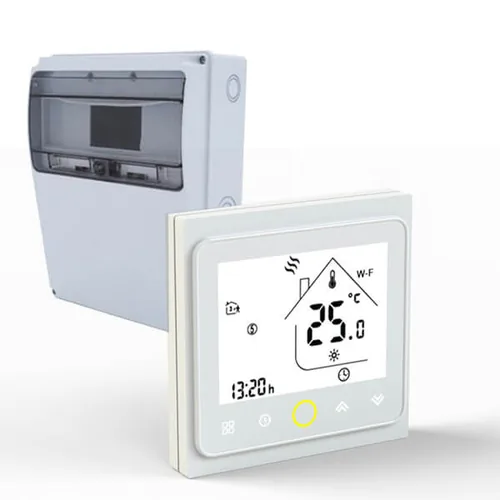
A floor heating thermostat switches the heating cable or mat beneath the floor on and off according to temperature.
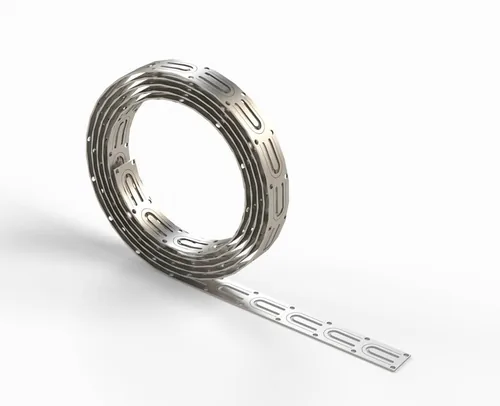
The floor heating cable fixing strip is a galvanised steel fixing strip with teeth at 2.5 cm intervals.
Both heat the floor; the building usually decides, not preference. A wet system needs a boiler or heat pump, manifold, pump and pipes, is planned at shell construction stage and raises the floor noticeably — it suits whole new-build flats and houses. An electric system needs only the heater and a thermostat, can be installed in an existing building, adds only a few millimetres to a few centimetres depending on the heater, and heats a single room if required. There are no moving parts under the floor.
The two are not rivals. A common combination is a wet system in the living areas and electric underfloor heating in bathrooms and kitchens — or electric heating in wet rooms alongside existing radiators, so that in spring and autumn the bathroom can be warm without firing the boiler.
| Heater | Thickness | Laid under | Coverings | Best for | Warranty |
|---|---|---|---|---|---|
| EasyMat heating mat | 6 mm | Screed or floor mortar | Ceramic, porcelain, granite, natural stone | Wide, regular floors — the spacing is set at the factory, you unroll and fix | 20 years on the heating element |
| TMax heating cable | approx. 6 mm cable | Screed or tile adhesive | Ceramic, stone; laminate and parquet over the screed | Narrow, L-shaped or irregular floors, many pipes and corners | 20 years on the heating element |
| FilmMax carbon heating film | under 1 mm | Directly under the floating floor, no screed | Laminate (click), vinyl, LVT | Renovation where no screed can be poured | 2 years |
The mat is the same TMax cable, stitched onto fibreglass mesh at the correct spacing — same power, same protection class, same warranty. The choice between them is about the shape of the floor, not quality. Cable and mat are made to length for the ordered area and delivered terminated; the heating cable is never cut on site. For loose-laid cable, the toothed fixing strip keeps the spacing until the screed is poured.
Carbon film is not laid under ceramic, stone or carpet, and no nails or screws may be driven through it — solid parquet fixed that way is not suitable.
| Step | Room | Ready-made system |
|---|---|---|
| 150 W/m² | Living rooms, bedrooms, hallways, kitchens | Room and living room · Kitchen |
| 180 W/m² | Bathrooms, under tiles | Bathroom floor heating |
| 200 W/m² | Balconies, terraces, conservatories | Balcony, terrace and conservatory |
| 200 W/m² | Under laminate and vinyl, no screed | Carbon heating film |
| 240 W/m² | Hammam and spa — walking area, benches, navel stone | Hammam floor heating |
All steps are standard values for use as main heating. Size the net heated area, not the room: nothing is laid under the bath, shower tray, kitchen units, fitted wardrobes or the washing machine — heat there is neither felt nor useful. Keep 5–10 cm from walls and 10–20 cm from fixed furniture. The net area is usually well below the floor area.
Most electric underfloor heating is installed in existing buildings. Floor build-up is what usually decides the heater:
An insulation underlay under the heater sends the heat upwards instead of into the slab below; with underlay, warm-up is roughly 30% faster. It matters most on ground floors and above unheated basements.
A mat floor is usually laid in one day, a cable floor takes a little longer. Screed and adhesive drying time comes on top — the system is not switched on until they have cured. Measure and record the insulation resistance before and after covering; that record is the basis of the warranty.
Each heating circuit has its own thermostat and an NTC floor sensor placed midway between two cable runs, inside a conduit so it can be replaced later. One thermostat controls up to 12 m²; a 24 m² floor is split into two zones. This per-room zoning is where electric underfloor heating saves energy: only rooms in use are heated, each on its own schedule.
| Model | Setting | Programme | Remote |
|---|---|---|---|
| Analogue | Dial, one target temperature | None | No |
| Digital touch | Touch screen | Weekly, separate time bands per day | No |
| Wifi (smart) | Touch screen and phone app | Weekly, editable from the phone | Yes, with consumption monitoring |
All three floor heating thermostats run on 230 V AC, switch 16 A and come with the floor sensor. Floor surface temperature is typically held at 22–25 °C, which is enough for main heating; the thermostat upper limit is 45 °C, and under laminate and parquet 25 °C is the maximum.
In bathrooms and other wet rooms the heating element, floor sensor and site connections are IP67, the cable carries an earthed braided shield, a 30 mA residual current device (RCD) is mandatory and the thermostat and junction box are mounted outside the wet zone. Connection to the supply is work for a qualified electrician.
Installed power alone does not give the bill. The calculation is:
net heated area (m²) × power step (W/m²) × daily running hours × your electricity tariff
Example: a bathroom with 5 m² net heated area at 180 W/m² has 0.9 kW installed. Running 6 hours a day gives an upper bound of about 162 kWh a month; multiply by your unit rate. It is an upper bound because the thermostat switches off once the floor reaches its target — the system does not draw power the whole time it is on.
What changes the real figure is running time: poor insulation, cold rooms below and frequently opened windows do not change the heater's output, they lengthen the time it stays on. An insulation underlay and a weekly programme or smart thermostat shorten it noticeably.
HomeMax heating cable and EasyMat mats are ISITMAX's own manufacture, CE-certified, produced since 1995. Every heater is made to length for the ordered area, terminated with a factory-connected cold lead and supplied for 220–240 V AC, 50 Hz. Hotels and larger projects typically combine several systems — rooms, bathrooms, hammam — on one order.
Warranty: 20 years on the TMax cable and EasyMat heating element for indoor use; 2 years on carbon film, thermostats, sensors and installation accessories. If a cable is damaged after installation, the fault point is located with a thermal camera and only the covering over that spot is lifted — the floor is not torn up.
Send us room list, net areas and floor coverings via the contact page for an export quotation.
Room list, net heated area and covering per room — with these we propose heater type, power step and thermostats for your project the same day.